Conspiracy-Theories.EU

Objektive transdiziplinäre Analysen des "Verschwörungstheorie-Memes" durch unabhängige, integre akademische Experten.

Springe zum Inhalt
  • Home
    • Landing Page
  • Basics
    • Gustave Le Bon: Psychology of Crowds
    • Edward Bernays: Propaganda
    • Dr. John Coleman: The Tavistock Institute of Human Relations
    • Chomsky-Herman Propaganda Model
    • Operation Northwoods
    • Gulf of Tonkin
    • EU definition of conspiacy theories
  • Perception
    • Apophenia
    • Pareidolia
  • TUIs
  • Blog
  • Contribute
  • Literature Database
  • Sitemap

Schlagwort-Archive: hegemony

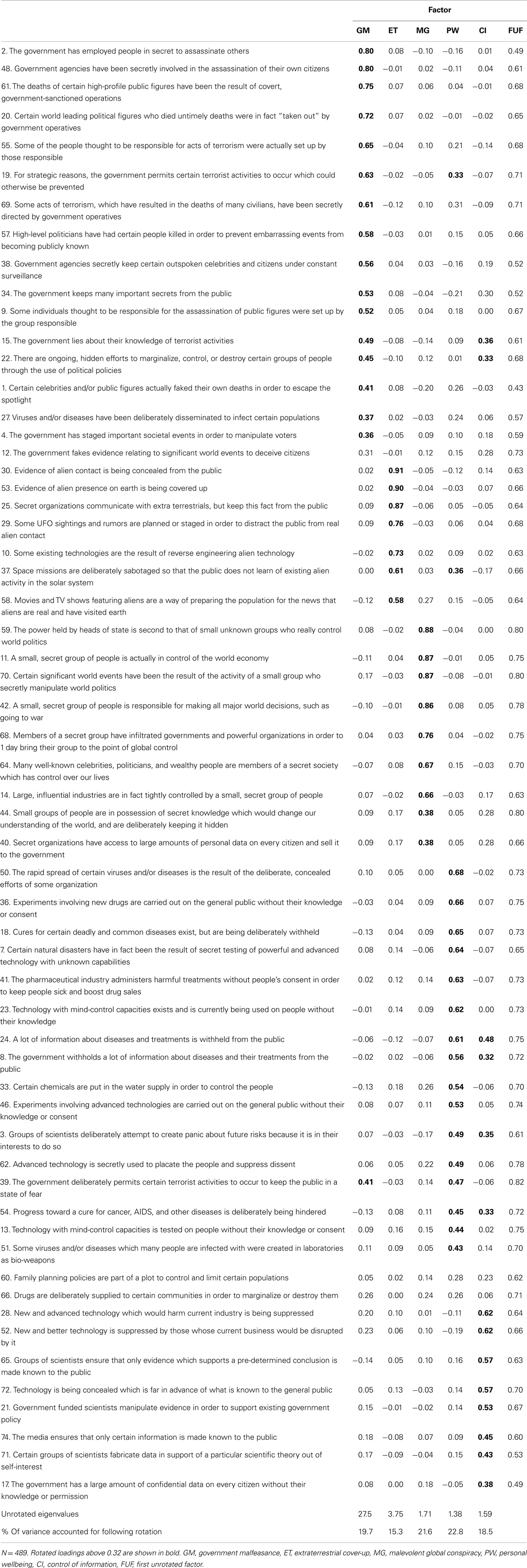
Conspiracy Beliefs Scale

Schreibe eine Antwort

Dieser Beitrag wurde am 15. Juni 2019 von web45 in General, Peer reviewed articles veröffentlicht. Schlagworte: conspiracy theorist, conspiracy theory, critical discourse analysis, hegemony, Propaganda.

Anything in here will be replaced on browsers that support the canvas element

  • Propaganda
  • Belief-Bias
  • Ostracism
  • 911
  • CIA
  • Conspiracy Theories
  • Inocculation Theory
  • Dual-Process Theory
  • Elaboration-Likelihood Model
  • Baysian Epsitemology
  • Pattern Recognition
  • Rational Intelligence
  • Dysrationalia
  • Deduction
  • Inference
  • Logical Reasoning
  • Heuristics & Biases
  • Group-Consensus
  • Group-Conformity
  • Group Dynamics

AI Translation

en English
af Afrikaanssq Albanianam Amharicar Arabichy Armenianaz Azerbaijanieu Basquebe Belarusianbn Bengalibs Bosnianbg Bulgarianca Catalanceb Cebuanony Chichewazh-CN Chinese (Simplified)zh-TW Chinese (Traditional)co Corsicanhr Croatiancs Czechda Danishnl Dutchen Englisheo Esperantoet Estoniantl Filipinofi Finnishfr Frenchfy Frisiangl Galicianka Georgiande Germanel Greekgu Gujaratiht Haitian Creoleha Hausahaw Hawaiianiw Hebrewhi Hindihmn Hmonghu Hungarianis Icelandicig Igboid Indonesianga Irishit Italianja Japanesejw Javanesekn Kannadakk Kazakhkm Khmerko Koreanku Kurdish (Kurmanji)ky Kyrgyzlo Laola Latinlv Latvianlt Lithuanianlb Luxembourgishmk Macedonianmg Malagasyms Malayml Malayalammt Maltesemi Maorimr Marathimn Mongolianmy Myanmar (Burmese)ne Nepalino Norwegianps Pashtofa Persianpl Polishpt Portuguesepa Punjabiro Romanianru Russiansm Samoangd Scottish Gaelicsr Serbianst Sesothosn Shonasd Sindhisi Sinhalask Slovaksl Slovenianso Somalies Spanishsu Sudanesesw Swahilisv Swedishtg Tajikta Tamilte Teluguth Thaitr Turkishuk Ukrainianur Urduuz Uzbekvi Vietnamesecy Welshxh Xhosayi Yiddishyo Yorubazu Zulu

Intelligent Search Function

Generic selectors
Exact matches only
Search in title
Search in content
Search in posts
Search in pages

Neue Beiträge

  • EU infographics
  • Synopsis of logical fallacies
  • Belief bias
  • Confirmation bias
  • Believing in hidden plots is associated with decreased behavioral trust: Conspiracy belief as greater sensitivity to social threat or insensitivity towards its absence?

Quotes by Berthold Brecht:

Display all quotes

He who does not know the truth is merely a fool. But he who knows it and calls it a lie is a criminal.

Inventions for people are suppressed, inventions against them are promoted.

Bank robbery: an initiative of dilettantes. True professionals found a bank.

Writers cannot write as fast as governments make wars; for writing requires thinking.

He who says A does not have to say B. He can also realise that A was wrong.

First comes the food, then comes the morale.

No advance is as difficult as the return to reason.


  • 3.012
  • 16
  • 14. November 2022
EU infographics
EU infographics
Read more
Conspiracy Beliefs Scale


Read more
Collective narcissism and the growth of conspiracy thinking over the course of the 2016 United States presidential election: A longitudinal analysis
Golec de Zavala, A., & Federico, C. M.. (2018). Collective narcissism and the growth of conspiracy thinking over the course of the 2016 United States presidential election: A longitudinal analysis. European Journal of Social Psychology
Plain numerical DOI: 10.1002/ejsp.2496
DOI URL
directSciHub download
“Using data from a longitudinal
Read more
Confirmation bias
Confirmation bias
Confirmation bias is the tendency to search for, interpret, favor, and recall information in a way that confirms or supports one's prior beliefs or values. People display this bias when they select information that supports their views, ignoring contrary information, or when they interpret ambiguous evidence as supporting their existing attitudes. The effect is strongest for desired outcomes, for emotionally charged issues, and for deeply entrenched beliefs. Confirmation bias cannot be eliminated,
Read more
Countering Criticism of the Warren Report (PSYCH 1967)
Weaponization of the term"conspiracy theory"


CIA record #104-10406-10110 on "Countering Criticism Of The Warren Report", Uncovered by a 1976 FOIA request from the New York Times.


PSYCH

1. Our Concern. From the day of President Kennedy's assassination on, there has been speculation about the responsibility for his murder.
Read more
previous arrow
next arrow
 
#Sitemap | Categories and Semantics
https://www.cognovo.eu/people/research-fellows/christopher-germann.php Creative Commons License
This work is licensed under a Creative Commons Attribution-NonCommercial-ShareAlike 4.0 International License.
Powered by the open-source semantic publishing software WordPress
Digital cryptocurrency donations to support www.conspiracy-theories.eu (BTC):
(CC) 2016—
The research behind www.conspiracy-theories.eu was funded by the EU Marie Curie Initial Training Network as part of the CogNovo Project#14 entitled "Irrational Decisions" FP7-PEOPLE-2013-ITN-604764
→ Primary goals of research and innovation policy as defined by the European Comission: Open Innovation, Open Science, Open to the World.
§ Legal disclaimer: The interdisciplinary Marie Curie CogNovo program has been intentionally designed by the European Union and the University of Plymouth (United Kingdom) to discuss and disseminate a wide view on a diverse spectrum of topics including psychology, neuroscience, current affairs, basic science, humanities, and the arts, inter alia. Note that the views and opinions expressed on this website do not necessarily represent the opinions of any of the institutions mentioned on this website and belong exclusively to the copyright holder. The CogNovo program explicitly emphasises cognitive and social innovation, the generation of new ideas and perspectives, and the probing of boundaries, but see https://www.cognovo.eu/about/
de_DEGerman
en_GBEnglish de_DEGerman